 vegegame.com
How to Play Carry The Glass: A Complete Step-by-Step Guide
How to Play Carry The Glass: A Complete Step-by-Step Guide
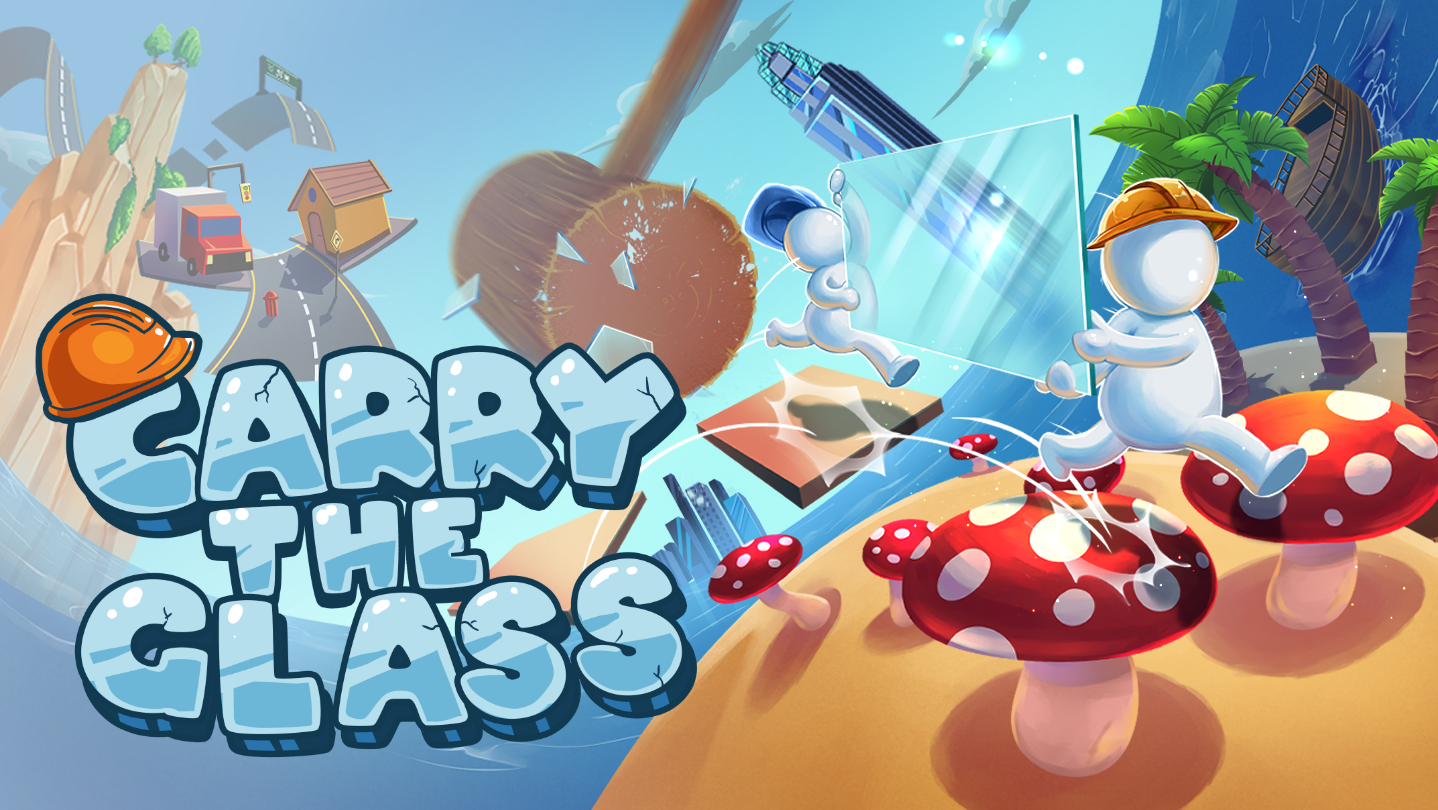
Carry The Glass is a cooperative physics-based platform game in which two construction workers must transport a fragile glass window through challenging environments. The objective sounds straightforward: pick up the glass, move through the level, avoid obstacles, and deliver it safely. However, the difficulty comes from the fact that both players must coordinate their movements while controlling an object that can easily collide with the environment. A small mistake, an unexpected turn, or a poorly timed jump can turn a promising attempt into a shattered-glass disaster.
The best way to learn Carry The Glass is to approach it as a sequence of practical tasks. First, understand the cooperative objective and prepare your multiplayer session. Next, learn how to move together, control the glass, navigate obstacles, and use checkpoints effectively. Once the basic mechanics become familiar, you can move on to the more demanding challenges in Skyscraper, Lighthouse, and Frosty. This guide explains how to approach each stage, how to avoid common mistakes, and how to improve your performance in both regular play and competitive races.

1. Start a Game and Choose the Right Mode
Before carrying anything, decide how you want to experience Carry The Glass. The game is designed around two-player cooperation, so the first important step is finding a partner. Invite a friend into your lobby and make sure both players are ready before beginning. Playing with someone who can communicate clearly makes a significant difference because the glass is shared between two characters. Neither player can treat the journey as an individual platforming challenge.
The game offers different difficulty options that change how forgiving a run can be. Normal mode is the best starting point for beginners because it provides a more accessible experience. Hard mode reduces the number of checkpoints, making mistakes more costly. Impossible mode removes checkpoints, requiring the team to complete the level without relying on intermediate progress saves. The Steam store describes these distinctions directly, so choose a difficulty based on your experience rather than simply selecting the hardest option immediately.
Which mode should beginners choose?
- Normal: Start here to learn the movement, obstacles, and level layouts.
- Hard: Choose this after you understand the route and can avoid most common mistakes.
- Impossible: Attempt this when both players can complete the level consistently without frequent failures.
- 2v2 Glass Race: Use this competitive mode when you want to race another pair instead of focusing only on cooperative completion.
A sensible progression is to complete a level on Normal first, then replay it on Hard. Only move to Impossible when you and your partner can communicate naturally and handle the major obstacles without repeated resets. This approach builds confidence and prevents difficult settings from hiding the basic lessons you need to learn.
2. Learn the Basic Carrying Mechanics Before Moving
Once the level begins, do not immediately rush toward the next platform. Spend a moment understanding how your character interacts with the glass. Carry The Glass uses physics-based character movement, meaning your character's body and movement can affect how the shared object behaves. The game is not simply asking you to walk along a fixed path while an item follows automatically. Both players are involved in transporting the pane, and their actions need to work together.
The 2.0 update improved the carrying mechanic by allowing each player to lift and control their own side of the glass independently. It also introduced push-and-pull behavior depending on the distance between the carriers. This gives players more control over the object, but it also makes coordination more important. If one player changes their position or raises their side without warning, the other player may have to react to an unexpected movement.
Practice on safe ground
Before approaching a difficult obstacle, use an open area to test basic movement. Walk forward together, stop at the same time, and try a small change of direction. Pay attention to how the glass responds when one player moves slightly faster. Then practice making small adjustments to each side of the pane.
A useful beginner routine is:
- Pick up the glass and allow both characters to settle into position.
- Move forward slowly for a short distance.
- Stop together and check the position of the glass.
- Practice a small turn without rushing.
- Test the independent lifting mechanic.
- Return to a stable position before continuing.
Avoid unnecessary movement
Do not constantly change direction or height just to experiment while approaching a hazard. Every adjustment should have a reason. If the glass is already positioned correctly, leave it alone and concentrate on moving through the route. Learning when not to adjust the object is just as important as learning how to control it.
3. Coordinate With Your Partner Using Simple Commands
Communication is one of the most important skills in Carry The Glass. Two players can understand the level perfectly and still fail if they do not coordinate their actions. For example, one player might decide to move forward while the other is preparing to turn. The resulting difference in direction can make the glass difficult to control. The solution is to agree on a simple communication system before attempting complicated sections.
You do not need long explanations during gameplay. Short commands are easier to understand, especially when both players are concentrating on the same obstacle. One person can take responsibility for calling the next movement, while the other follows and reports problems. This does not mean one player should control every decision. Both players should be able to request a stop whenever the glass becomes unstable or the route looks unsafe.
Use consistent callouts
Try using the following commands:
- Go: Both players begin moving.
- Stop: Both players immediately pause.
- Left / Right: Prepare to change direction together.
- Lift: Raise the relevant side of the glass.
- Lower: Reduce the height of the glass.
- Wait: Stop and observe a moving obstacle.
- Jump: Prepare for a coordinated jump.
- Clear: The entire glass has passed the obstacle.
The most important command is “Stop.” If either player notices a dangerous position, the team should pause before attempting to correct it. Continuing to move while arguing about what went wrong usually creates more problems.
Decide who leads each section
A leader-and-follower system can make movement more predictable. The leader watches the route and announces when the team should move, stop, turn, or jump. The follower matches the instruction and focuses on the position of their side of the glass. Players can switch roles when the route changes or when one person has a better view of the next obstacle.
Remember that leading does not mean moving faster than your partner. The leader must consider both characters and the full width of the glass. A good call is one that both players can follow comfortably.
4. Control the Glass Angle and Maintain Proper Spacing
After learning the basic movement, the next step is controlling the angle of the pane. Independent lifting allows each player to adjust their own side, which can help when the route requires a different carrying position. However, raising one side while leaving the other unchanged can tilt the glass. That may be useful for a particular obstacle, but an accidental tilt can cause the pane to strike a wall, platform, or other structure.
Start by making small adjustments while standing in a safe area. Communicate which side needs to move and why. Once the glass reaches the intended position, pause briefly to check that both players can maintain it. Avoid changing the angle repeatedly while walking because this makes it harder to predict the object's movement.
How to manage spacing
The distance between players is equally important. If one carrier moves too far ahead, the other may be pulled or pushed as the game responds to their relative positions. If both players move in opposite directions, they can create an awkward carrying position. The safest approach is to maintain a comfortable distance and correct small differences before they become large.
Use these habits:
- Walk at a pace both players can maintain.
- Stop when one player falls noticeably behind.
- Avoid sudden attempts to catch up.
- Make small position corrections on open ground.
- Recheck the glass angle after changing direction.
- Do not stretch the distance between players unnecessarily.
What to do when the glass becomes unstable
If the pane begins moving in an unexpected way, stop first. Identify whether the problem comes from spacing, angle, or direction. Then make one correction at a time. For example, if one side is too high, adjust that side rather than changing both players' positions and movement directions simultaneously. This makes it easier to understand what fixed the problem.
5. Navigate Narrow Passages and Avoid Collisions
Narrow passages are among the most important obstacles to learn because the characters and the glass do not occupy the same amount of space. A player may be able to walk through an opening comfortably while the pane is too wide or poorly aligned to pass through. Looking only at your character's position can therefore be misleading. You must consider the complete shape and orientation of the glass.
Approach every narrow opening slowly. Stop before entering and examine the available space. Decide whether the glass can pass in its current position or whether it needs a controlled adjustment. Do not begin moving until both players understand how they will cross. The front of the pane may clear the opening while the rear edge is still close to the obstacle, so continue checking the entire object until it is safely through.
Follow a three-stage passage method
Stage 1: Approach
Move toward the opening together, then stop at a safe distance. Avoid standing so close that you have no room to make an adjustment.
Stage 2: Align
Check the direction and angle of the glass. If necessary, make a small correction while stationary. Both players should confirm that the pane is positioned correctly before moving.
Stage 3: Cross
Move slowly and consistently. Avoid sudden turns or changes in height while the glass is inside the narrow section. Continue until the entire pane has cleared the opening.
Common collision mistakes
- Turning before the rear edge has cleared the passage.
- Moving forward while one player is still adjusting their position.
- Assuming the character's clearance guarantees the glass will fit.
- Making a large angle change at the last moment.
- Rushing because the opening looks wider than it actually is.
If the glass hits an obstacle, do not immediately repeat the same movement. Stop and identify which part of the pane collided. Then change the approach angle, starting position, or movement timing. A small adjustment before entering is usually safer than trying to correct a collision halfway through.
6. Complete Jumps, Platforms, and Moving Obstacles
Platforming sections require both players to pay attention to timing. A jump that is easy for one character may become difficult when the glass must also be transported. If one player jumps earlier than the other, the pair can lose their coordinated position. This is why jumping should be treated as a shared action rather than two separate attempts to cross a gap.
Before jumping, move to a safe starting position and stop. Confirm that both players are facing the correct direction and are ready to move. Use a countdown or a clear command so the jump begins at approximately the same time. After landing, pause briefly instead of immediately continuing forward. This gives both players an opportunity to restore their spacing and make sure the glass is under control.
How to cross a jump safely
- Approach the edge together.
- Stop before reaching the point where movement becomes difficult to correct.
- Check that both players are ready.
- Count down and jump together.
- Avoid unnecessary directional changes during the jump.
- After landing, stop and re-establish a stable position.
How to handle moving obstacles
Moving hazards require observation before action. Watch the obstacle long enough to understand its movement pattern and identify a suitable moment to cross. Do not begin simply because the route looks open for a second. Consider whether the entire glass can pass through before the hazard changes position.
One player can focus on watching the obstacle while the other pays attention to the glass's clearance. Communicate when the safe window begins, then move together. If the timing becomes uncertain, wait for another opportunity rather than forcing a risky crossing.

7. Progress Through Skyscraper and Lighthouse
Carry The Glass includes the Skyscraper and Lighthouse levels, each offering a different collection of platforming challenges. The best way to approach either level is to learn its route gradually instead of trying to complete every section at full speed on the first attempt. Pay attention to where the glass needs to change direction, where the route becomes narrow, and where a jump or moving obstacle requires both players to act together.
How to approach Skyscraper
Treat Skyscraper as a training ground for the core carrying skills. Focus on moving through the construction environment without making unnecessary adjustments. Learn to approach openings carefully, keep the pane aligned, and stop before difficult transitions. When you reach a section that causes repeated failures, practice that section rather than rushing through the earlier parts again without changing your technique.
A useful method is to divide the level into smaller objectives:
- Complete the opening section with stable movement.
- Identify the first major obstacle that requires careful alignment.
- Practice the transition after each difficult platform.
- Review any collision before repeating the section.
- Maintain the same communication routine throughout the level.
How to approach Lighthouse
Lighthouse adds another layer of challenge with additional obstacles, tricky platforming sections, and the Crab Boss. The 2.0 update introduced this level alongside improvements to the glass-carrying mechanic, including independent control of each player's side. This makes Lighthouse a good place to apply the more advanced techniques you learned earlier.
Do not assume that the same movement pattern used in Skyscraper will work everywhere. Observe each obstacle and decide whether the team needs to change its spacing, angle, or timing. During the Crab Boss encounter, prioritize understanding the encounter's hazards and coordinating movement rather than rushing blindly. If an attempt fails, identify the specific moment when the team lost control and adjust that part of the strategy.
8. Complete Frosty and Its Special Challenges
Frosty is the third level introduced in the 3.0 update. Its snowy setting adds several distinctive challenges, including golden keys, sinking lily pads, a ski lift, the 9 Color game, and a giant Snowball Boss. These activities make the level more varied than a straightforward sequence of platforms. Players need to pay attention to the environment and understand what each section requires before moving the glass forward.
Collect the golden keys
One of the main objectives in Frosty is collecting three golden keys to open the arctic base. Treat key collection as a route-planning task. Before moving into a new section, check where the objective is and determine how to reach it without exposing the glass to unnecessary danger. Do not become so focused on collecting an item that you forget to maintain control of the pane.
Cross the sinking lily pads
Sinking lily pads make timing especially important. Avoid standing still on a temporary platform while deciding what to do next. Discuss the next movement before stepping onto the surface, then cross with a controlled pace. Both players should be ready to move and should avoid making separate decisions once the crossing begins.
Use the ski lift and complete the 9 Color game
The ski lift and 9 Color game introduce different kinds of environmental challenges. Take time to understand the sequence and the objective before committing to movement. If a section requires waiting or reacting to a visual cue, make sure both players are paying attention. Clear communication is particularly valuable when one player sees a hazard before the other.
Prepare for the Snowball Boss
The Snowball Boss is one of Frosty's major encounters. Approach it as a coordinated challenge rather than an ordinary walking section. Observe the encounter, understand when it is safe to move, and avoid unnecessary adjustments to the glass while responding to hazards. The official 3.0 announcement also lists defeating the Snowball Boss as an achievement objective, making it a notable part of the level's progression.
9. Use Checkpoints, Achievements, and Practice to Improve
Checkpoints are valuable because they allow players to make progress through a level without treating every mistake as a complete restart. Normal mode is useful for learning because it offers a more forgiving checkpoint experience. Hard mode has fewer checkpoints, while Impossible mode removes them entirely. This means that the cost of a mistake becomes increasingly significant as the difficulty rises.
When you reach a checkpoint, use it as an opportunity to review your performance. Think about which obstacle was most difficult and what caused the problem. Was the glass tilted incorrectly? Did one player move too far ahead? Did the team jump at different times? Did the pane collide with an obstacle because the pair entered a passage from the wrong angle? Identifying the cause is more useful than simply blaming the last player who moved.
Create a repeatable practice routine
- Complete a section slowly before trying to improve your time.
- Identify the movement that causes the most mistakes.
- Change one part of the strategy at a time.
- Repeat the section and compare the result.
- Keep successful adjustments consistent.
- Increase speed only after the route becomes reliable.
Work toward achievements gradually
Carry The Glass includes achievements and leaderboards, and the 3.0 update added new Frosty achievements and level leaderboards. Some objectives reward completing levels on harder difficulties, finishing within a time limit, finding hidden eggs, or winning specific challenges. Do not attempt every achievement during your first run. Learn the level first, then replay it with one clear objective in mind.
For example, a completion-focused run should prioritize safe movement. A time-focused run should reduce unnecessary pauses without sacrificing control. A collectible-focused run should prioritize exploration and careful route planning. Separating these goals makes each attempt easier to understand and improves your chances of success.
10. Improve Your Performance in 2v2 Glass Race
Once you and your partner understand the regular cooperative experience, try 2v2 Glass Race. Introduced in the 3.0 update, this mode places two pairs on the same course and challenges them to reach the finish first. The rival team appears as a ghost, so the competition is based on finishing time rather than physically interfering with the other team's glass. Frosty can also be played in this race mode.
The biggest mistake in competitive play is allowing the other team to dictate your pace. Seeing a rival move ahead can make your pair rush through an obstacle before both players are ready. That is exactly when avoidable mistakes happen. Instead, focus on your own route and use the same communication system that works in cooperative play. A clean run is often more valuable than a risky shortcut that causes a collision.
How to prepare for a race
Before entering a competitive attempt, complete the course in regular play and identify the sections that usually slow you down. Practice difficult passages, jumps, and moving obstacles until you can handle them consistently. Then decide where you can save time without making the glass unstable.
A good race strategy follows three principles:
- Build consistency first: Know how to complete the course safely.
- Reduce unnecessary waiting: Move promptly when both players are ready and the route is clear.
- Protect the glass: Do not sacrifice a reliable run for a small and uncertain time advantage.
Turn teamwork into speed
The best competitive teams do not necessarily make the fastest individual movements. They make fewer mistakes together. They communicate before obstacles, maintain a stable distance, and avoid unnecessary corrections. Once these habits become automatic, the pair can move more efficiently without losing control.
The same principle applies when attempting leaderboard times or speed-related achievements. Learn the route, establish a reliable method, and then improve the pace gradually. The goal is not to move quickly at every moment. It is to remove wasted movement while preserving the coordination that keeps the glass intact.

Conclusion: Learn the Route, Coordinate Every Move, and Protect the Glass
Learning Carry The Glass is a process of developing cooperation, movement control, and awareness of the environment. Begin with Normal mode, find a partner who communicates clearly, and practice basic carrying movements before attempting difficult obstacles. Understand how independent lifting and push-and-pull positioning affect the glass, then use simple commands to coordinate turns, jumps, and adjustments.
As you progress through Skyscraper, Lighthouse, and Frosty, adapt your approach to each environment. Narrow passages require careful alignment, jumps demand synchronized timing, and moving hazards reward patience. Use checkpoints to identify mistakes, practice difficult sections, and increase your speed only after you can complete them reliably. When you are ready, take those skills into 2v2 Glass Race and compete without allowing the pressure of a rival team to disrupt your coordination.
Ultimately, the most effective way to play Carry The Glass is to treat the pane as a shared responsibility. Every movement should account for both players and the object they are carrying. Communicate clearly, make deliberate adjustments, and remember that reaching the finish line with the glass intact is always the first priority.