.webp)








The Core Equation: High Risk, High Reward, and Zero Forgiveness
PUBG (PlayerUnknown's Battlegrounds) remains the definitive tactical experience in the battle royale genre. While many contemporaries have shifted toward faster, ability-focused combat, PUBG's core strength lies in its grounding in realistic physics, weapon ballistics, and high-stakes survival. The game’s appeal is the perfect storm of patience and precision, where every decision—from the initial drop trajectory to the final grenade throw—carries the potential for instant reward or immediate elimination.
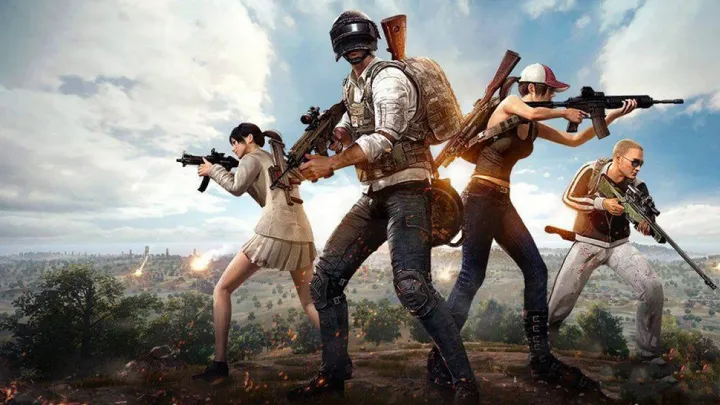
The game's persistent competitive relevance is maintained through three non-negotiable pillars: the Ballistic Mastery Requirement, the Dynamic Map Meta, and the Unpredictable Circle Geometry.
The Ballistic Mastery Requirement
Unlike games with hitscan weapons, PUBG demands mastery of Bullet Drop and Travel Time. Every engagement beyond 50 meters transforms into a calculated physics problem. Players must not only lead their targets but also compensate for the bullet's natural arc over distance. This system ensures that raw mechanical skill—the ability to control recoil on a full-auto spray at 100 meters, or accurately calculating a 400-meter headshot—is the ultimate arbiter of victory.
Developers consistently refine this ballistic ecosystem. Updates often bring subtle but powerful changes to weapon attachments (like stabilizers or grips) or global recoil mechanics. These refinements ensure that no single weapon dominates the landscape for too long, perpetually forcing veterans to return to the Training Grounds to re-dial their spray patterns and maintain their edge.
The Evolution of the Battleground: Strategy Through Map Design
PUBG’s development philosophy heavily relies on keeping the player experience fresh not through constant new gimmicks, but through the continuous re-engineering of its physical space.
Mastering the Dynamic Map Meta
The game's vast map pool—from the barren deserts of Miramar to the tropical jungles of Sanhok—is crucial for longevity. Each map is not just a backdrop; it dictates the entire strategic meta.
- Vehicle Importance: Maps like Erangel and Miramar necessitate immediate vehicle acquisition due to their size, making early game rotation strategy paramount.
- Weapon Priorities: Dense, vertical maps like Karakin favor SMGs and shotguns for tight indoor combat, while maps like Taego with vast open fields put a premium on DMRs and 4x or 6x scopes.
The developers often utilize Major Map Reworks (such as updating Erangel or adding permanent features to Deston) to fundamentally alter these tactical dynamics. By changing the flow of traffic, adding new high-ground positions, or introducing dynamic features like emergency parachutes, the developers ensure that no single strategy remains dominant for too long. Veterans are constantly challenged to adapt their drop points, loadouts, and rotation timings to the current state of the map.
The Ultimate Risk Management: Circle Geometry and Rotation
The heart of PUBG's strategic depth lies in the unpredictability of the safe zone (the Circle). The core skill is not knowing where the circle will end, but how to react to the randomness of its collapse.
Calculating the Perfect Rotation
Successful players operate on the principle of "Circle Ahead," always moving to secure the next strong defensive position before the circle forces a messy, desperate scramble.
- Anticipation and Positioning: Analyzing the center of the current circle and predicting the most likely path of the next one is a crucial skill. Players must choose between Center Holds (safe but predictable) and Edge Guarding (high-risk, high-reward for intercepting late rotators).
- Vehicle Management: Vehicles are the single best tool for mitigating circle risk. However, the expert player knows how to use the vehicle to deceive the enemy—driving past a compound to signal a rotation, only to double back and take up an unexpected position. Parking the vehicle away from one's position is an elementary but essential competitive tactic.
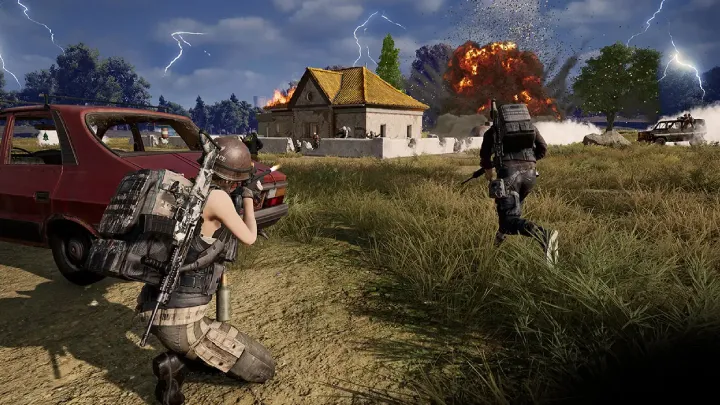
The End Game: The Power of Utility
In the final two circles, where space is minimal and hard cover is scarce, the importance of raw gun skill is superseded by Utility Management.
- Smoke Grenade Mastery: Smoke is not just defensive; it’s an offensive tool used to block enemy sightlines, create false cover for revives, or mask an aggressive push into a small zone. Mastering the trajectory and timing of smoke deployment is a non-negotiable final-circle skill.
- Frag Grenade Pressure: Frags are the primary tool for forcing an enemy out of hard cover. Highly ranked players calculate precise grenade arcs and air time to flush enemies from behind walls or rocks, creating easy eliminations without exposing themselves to fire.
The ongoing success of PUBG is rooted in this demanding ecosystem. Every update is a strategic test, ensuring that the game remains the genre’s pinnacle of tactical risk management. The Chicken Dinner is earned not just through shooting, but through superior geometry, calculated timing, and the mental fortitude to execute under extreme pressure.